Music Career Finder

Start Here:

1.

1. Pick one.

*This question is required.
3.

3. What are you most interested in? Select as many as you like. 

*This question is required.
  • Our pick for the best music production laptop is the Apple Macbook Pro
  • Other good options include Acer Swift, Dell XPS, Asus VivoBook Pro, and Microsoft Surface
  • Many people have used mobile devices to produce hits songs, but laptops are much easier to use and more powerful
  1. Introduction
  2. Do You Need a Laptop To Produce Music?
  3. What Specifications Your Laptop Needs
  4. Making the Most of Your Music Production Laptop
    1. Plugin Overload and CPU Strain
    2. Heat, Throttling, and Fan Noise
    3. Portability vs Performance (and Battery Reality)
    4. DAW and Plugin Compatibility (the Stuff That Breaks Your Week)
    5. Workflow Upgrades That Make a Laptop Feel Like a Studio
  5. The Best Music Production Laptops
    1. Apple Macbook Pro (Our #1 Pick)
    2. Acer Swift
    3. Dell XPS
    4. Asus VivoBook Pro
    5. Microsoft Surface
  6. Use What You Have or What You Can Afford

So you’re in the market music production laptop.

You want to make music at home or from anywhere.

This post will cover some of the best music production laptops for home producers. It includes the details you need to know about each, what makes each of the best ones special, and more.

Do You Need a Laptop To Produce Music?

A laptop is not the only device you can use to produce music. People have used phones and tablets to create pro-level music, songs that sound like they were made in a professional studio.

However, a laptop is often the best option for home producers.

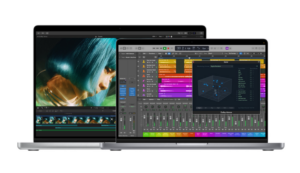
The main benefit of a laptop when recording is that it can be easier to use because the screen is bigger than a mobile device, it has a lot more storage, and it has much more computing power.

Yet a laptop is still mobile, letting you record at home or easily bring it to another location.
What Specifications Your Laptop Needs

The best way to figure out the specifications you need on your music production laptop is to compare your chosen laptop’s available RAM and storage to the required RAM and storage of your digital audio workstation (DAW) and equipment.

But generally speaking, here are the minimum specifications you need to produce music:

  • A multi-core processor, ideally an Intel Core i5/i7/i9 or AMD Ryzen 5/7/9
  • Minimum 16GB RAM (32GB is better for heavy sessions with lots of plugins)
  • At least 512GB SSD (Solid-State Drive) storage, with 1TB SSD or more for extensive libraries
  • Runs Windows or macOS because the recording software you’ll need works with either of these operating systems
  • Has USB 3.0/3.1, USB-C, and/or Thunderbolt ports for your audio interface

Hey, what do you think about trying our new Music Career HelperMusic Career Helper really quick? It’s totally free and could help get your career moving fast! Give it a try. It’s totally free and you have nothing to lose.

Making the Most of Your Music Production Laptop

Laptop music production has officially gone mainstream. Need proof? Billie Eilish’s Grammy winning debut album was recorded in a small bedroom on everyday gear, not a fancy studio. Her producer (and brother) Finneas has a simple mindset that fits how most of us actually make music now.

“It’s really important to work wherever you are, or wherever you have your tools.” – Finneas O’Connell

So yes, your music production laptop can be the whole studio. But to make it feel smooth (instead of glitchy and frustrating), you need to understand a few real world laptop issues that spec sheets do not warn you about.

Plugin Overload and CPU Strain

Beginners (and a lot of intermediates) do the same thing: keep adding synths, reverbs, mastering chains, and huge sample instruments until the session starts crackling. Even a strong laptop can choke when you stack too many heavy plugins at once, especially on instrument tracks.

When your session starts lagging, try raising your buffer size while you mix, then lower it again when recording vocals or MIDI. Also learn your DAW’s freeze or render feature. It turns a plugin heavy track into audio temporarily, so your laptop can breathe while you keep building the song.

Heat, Throttling, and Fan Noise

Laptops run hot because everything is crammed into a small space. If your CPU gets too warm, many systems will slow down to protect themselves. That performance drop can show up as random pops, dropouts, or sudden “why is this happening” moments in the middle of a session.

Fan noise is the other issue nobody wants to talk about. Some powerful laptops get loud when you push them, and that can bleed into vocal takes if you record in the same room. A simple laptop stand that improves airflow helps, and placing the laptop a few feet farther away from your mic often fixes more than you’d expect.

Portability vs Performance (and Battery Reality)

Big performance laptops can be amazing for heavy projects, but they are usually heavier, louder, and less fun to travel with. Also, some machines reduce performance on battery to save power. That means your “fast” laptop can feel mysteriously slower when you are producing away from an outlet.

If you do most of your work at home, prioritize performance and cooling. If you produce on the go, prioritize a laptop that stays stable on battery and runs quietly. The best choice is the one that matches your real workflow, not your fantasy workflow.

DAW and Plugin Compatibility (the Stuff That Breaks Your Week)

Before you buy, sanity check your software stack. Make sure your DAW, audio interface drivers, and must have plugins are compatible with your operating system and CPU type. Most popular tools are fine, but older niche plugins can be the surprise problem that forces workarounds.

Also remember that some DAWs are platform specific. If you are dead set on Logic Pro, you are choosing a Mac. If you love a Windows only workflow, do not buy a laptop that locks you out of the tools you already know.

Workflow Upgrades That Make a Laptop Feel Like a Studio

One laptop screen can get cramped fast when you have lots of tracks, automation lanes, and plugin windows open. If you can add one external monitor at home, do it. It makes arranging and mixing feel calmer, and you waste less time hunting for windows.

Ports matter more than people admit. You may need a MIDI keyboard, audio interface, external drive, and a charger plugged in at the same time. If your laptop is light on ports, budget for a good hub. And if you are serious about audio quality and latency, plan on using an external audio interface instead of the built in headphone jack.

One last reminder: the gap between a bedroom setup and a pro setup is smaller than it has ever been. Hyperpop producer Dylan Brady summed up the vibe perfectly.

“All you need is a laptop.” – Dylan Brady (100 gecs)

The Best Music Production Laptops

Here are some of the best music production laptops for home producers. The newest version of each of these should be enough for your music production needs.

Apple Macbook Pro (Our #1 Pick)

Apple Macbook Pro product image

If you like Apple’s design and operating system, I’d recommend a Macbook Pro, preferably whatever their newest model is.

It’s powerful enough to run any DAW, but it does come pre-loaded with GarageBand, which is a precursor to their more expansive (and paid) DAW, Logic Pro. Personally, I use a Macbook Pro with Reaper as my DAW, but I often will use GarageBand because of all the built-in sounds, effects, and samples.

Macbooks are on the more expensive side, but it’s an investment in your music career that’s worth making.

Pros & Cons

  • Great performance
  • Comes preloaded with GarageBand
  • Durable and portable
  • Much more expensive than other PCs

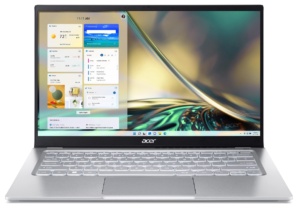
Acer Swift

acer swift 3 product image

The Acer Swift runs the Windows operating system, and it’s definitely a good option if your budget is smaller. It has all the ports you’ll need: USB-C, USB 3.2, and Thunderbolt. And you can choose the iteration of it that fits your needs, including one model that has 1 TB of storage.

Pros & Cons

  • Powerful performance for the price
  • Very good battery life
  • Not much RAM
  • Low storage space

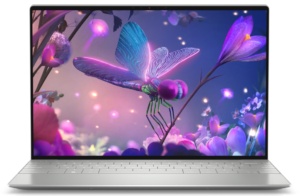
Dell XPS

dell xps product image

The Dell XPS also runs the Windows operating system, and it’s on the more expensive side with the most affordable option coming in at about $1,600. However, that’s because it offers a lot of power with its 4+ GHz processor and up to 4 TB of storage. It has all the ports you’ll need too: a USB-C and two Thunderbolts.

Pros & Cons

  • Powerful performance
  • Very good display
  • Somewhat pricey
  • Not many ports available

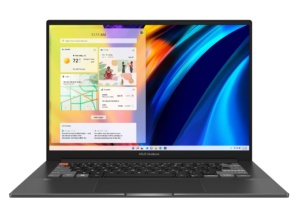
Asus VivoBook Pro

ASUS Vivobook Pro product image

The Asus VivoBook Pro is a solid option.

It runs the Windows operating system, and it gives you plenty of ports: three USB ports and a Thunderbolt port. It’s also made to military-grade toughness, which means if/when you drop it, it has a better chance of staying intact. Plus, the built-in speakers are 350% louder yet without distortion, just in case you need to play your music not through headphones or monitors.

And depending on the model you choose, it can be on the more affordable side.

Pros & Cons

  • Powerful performance
  • Plenty of storage
  • No Thunderbolt port

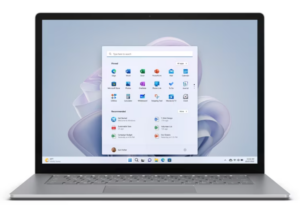
Microsoft Surface

microsoft Surface Laptop 5 product image

If you’re more of a fan of the Windows operating system, check out the Microsoft Surface laptop. It provides all the power you need to make music at home. Plus, you can use it as a touch screen if you’d like.

The one downside is that the newest version has just one Lightning Thunderbolt port, although you can buy a dock with additional ports, including USB ports. Depending on your recording setup, you may need more than one port so you can use your audio interface along with a MIDI controller and/or a USB mic.

Pros & Cons

  • Powerful performance
  • Doubles as a tablet
  • Not much storage
  • USB-C port only

Use What You Have or What You Can Afford

Ultimately, as long as your music production laptop meets the minimum requirements mentioned above, you can make music that stands next to any song created in a “pro” studio.

If you have a laptop that can run your chosen DAW and offers the right ports to plug in your equipment, you’re good to go.

Making great music is just a matter of knowing how to use your tools well. So pick the laptop you can afford that can run your chosen DAW and start making music.