Music Career Finder

Start Here:

1.

1. Pick one.

*This question is required.
3.

3. What are you most interested in? Select as many as you like. 

*This question is required.
  1. Introduction
  2. The Best Guitar Learning Apps for Newbies
    1. Ultimate Guitar
    2. Fender Play
    3. Gibson App
    4. Solo
    5. GuitarTuna
    6. JamPlay
  3. Choosing the Best Guitar Learning App for You
    1. Know your learning style and your goal
    2. Use the free trial like you mean it
    3. Win with consistency, not marathon sessions
    4. Use feedback features, and slow everything down
    5. Record yourself once a week
    6. Bonus tip: Keep it fun, and don’t go it alone

Now is the easiest time in history to pick up the guitar.

With the ocean of knowledge that is the internet, you can learn guitar without hiring a private teacher. Everything you need to know is available at your fingertips. With that in mind, let’s talk about the best guitar learning apps for beginners.

The Best Guitar Learning Apps for Newbies

Everyone develops skills differently. When it comes to learning guitar, some people are driven to be self-taught while others need a private teacher for some accountability.

When I picked up the guitar in 2002, I used Ultimate Guitar, ChordFind.com, a physical chord chart, and a CD player with my favorite songs on it. I never hired a teacher and didn’t go to school for guitar.

My point is, if you really want to learn guitar, you’ll teach yourself using tools from the internet, like a guitar learning app. And today, there are so many more helpful tools for beginner guitarists than I had. It’s the easiest time in history to learn guitar.
Ultimate Guitar

Ultimate Guitar

One of the best ways to learn guitar is to play other people’s songs. This teaches you basic chords, common chord progressions, and strumming patterns while enjoying the process.

Back when I taught myself guitar in 2002, Ultimate Guitar was my go-to source for learning how to play songs. It is now the go-to site for most musicians when they want to learn how to play their favorite artists’ songs. As of December 2021, it has tabs and chords for over 900,000 songs.

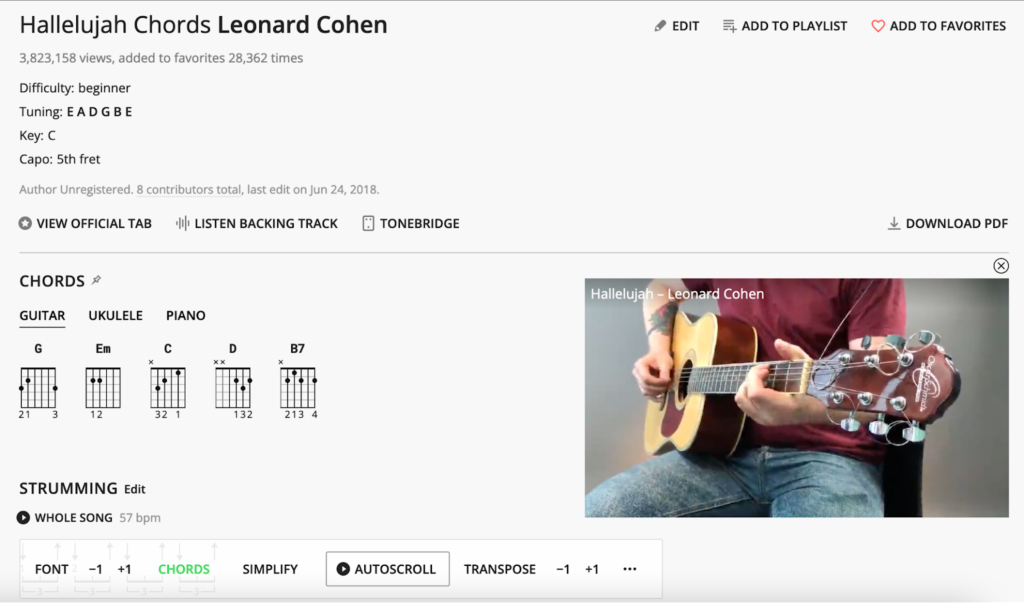
Each song on the site and app includes clear guitar diagrams, which show you how to play each chord, the strumming pattern (in both video and text form), and the lyrics with the chords over the corresponding word. Plus, there’s a comment section where people can ask questions and provide clarification.

Fender Play

The best guitarists in the world respect the Fender name, so we should expect a lot from Fender Play. And it seems to deliver.

It has lessons that teach you how to play some of the most well-known hits, both classic and new. Along the way, you learn the basic chords and how to switch between them within a song.

The cool thing about this app is, you can customize the lessons based on your favorite genre. Then you get immediate feedback based on how you played in each lesson. You can also jam along with a backing track to get a feel for playing with a band.

It is about $20 a month, which is definitely cheaper than an in-person guitar teacher.

Gibson App

The Gibson App was created by guitar teachers and it’s geared toward beginners, thanks to its clear, step-by-step approach. They also have games to try and make learning a little more fun. And they will give you real-time feedback so you know what you’re doing wrong and how to adjust.

They encourage you to learn other artists’ songs part by part, which is the method I highly recommend beginners use. You have motivation to learn certain chords so you can play your favorite songs. And once you learn the song, it’s super rewarding and you can show off to your friends.

You get a free 14-day trial and then will need to pay about $120 a year.

Solo

Solo is a newer member of the guitar learning app niche, but they show promise. It’s run by two experienced guitarists, Tom Quayle and David Beebee.

The app will show you a chord progression or scale, listen to you play it, analyze your performance in real time, and give you immediate feedback. And you can’t move on to the next step until you play the part correctly. This ensures you learn by doing before trying to learn something too advanced for you. That way, you’ll know you’re making progress.

This all makes Solo a solid option for beginners and intermediate guitarists.

GuitarTuna

GuitarTuna

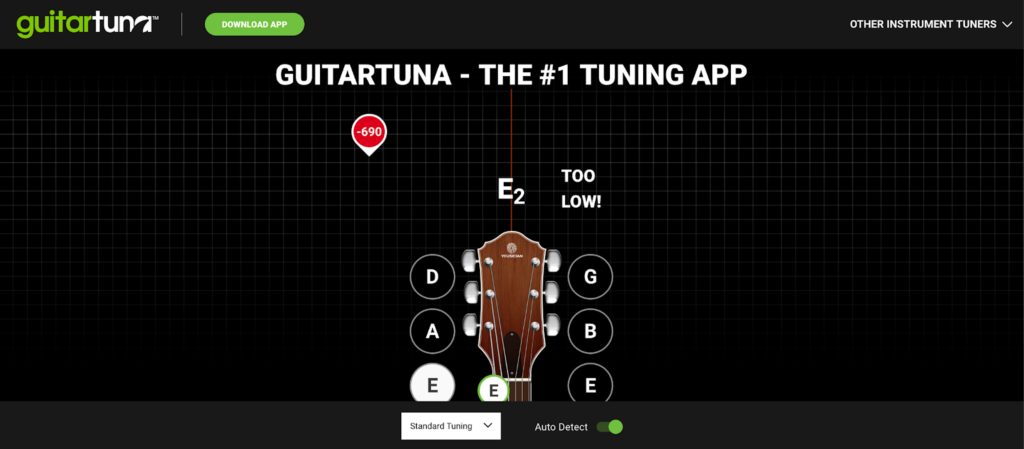
To learn guitar, you have to make sure your guitar is in tune. That’s where GuitarTuna comes in. It’s my favorite guitar tuning app – I use it every time I play guitar. In addition to being an easy-to-use free app, you can also use the browser version.

This app is from Yousician, a company that offers tons of other guitar learning resources and courses taught by well-known musicians, like Jason Mraz and Metallica.

JamPlay

JamPlay

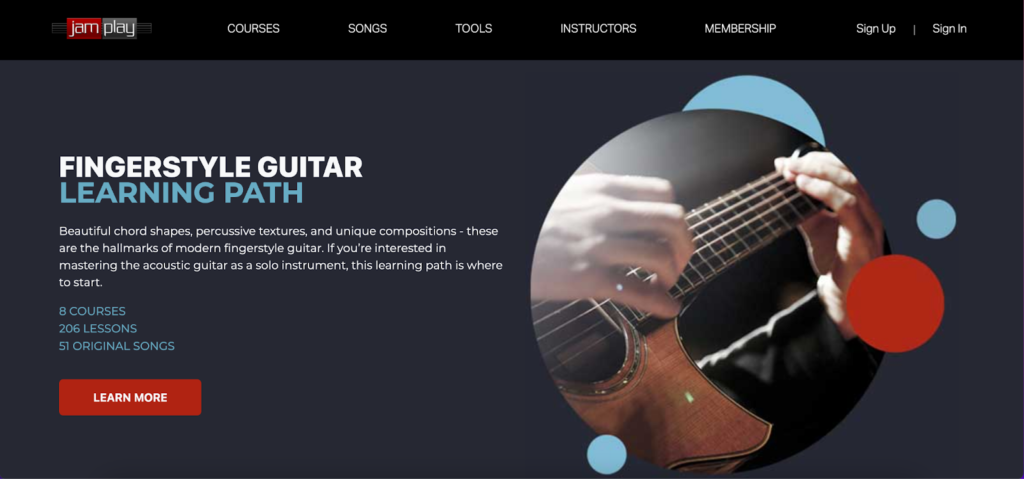
JamPlay offers a bunch of free guitar resources, like a chord finder, guitar tuner, and chord diagrams. And then if you want to learn from lessons, either on their site or the app, you can subscribe for about $15 a month.

You can choose your own “learning path,” like Rock Guitar, Blues Guitar, Country Guitar, and Fingerstyle Guitar. Each of these paths involve several courses, 100-200 lessons, and many JamTracks (backing tracks to jam along with).

Choosing the Best Guitar Learning App for You

You’ve got options. A lot of them. The real question is: which app will you actually stick with? Because “best” doesn’t mean “most features.” It means the one that makes you pick up the guitar on a random Tuesday when you’re tired and your fingers don’t feel like cooperating.

Most beginners quit because practice starts feeling like homework. Your goal is to pick an app that fits your brain, your music taste, and your attention span. If it makes you want to come back tomorrow, that’s the one.

The best guitar app isn’t the one with the most lessons. It’s the one that makes you want to come back.

Here’s how to choose smart, then squeeze real progress out of whatever you pick.

Know your learning style and your goal

Be honest. Do you want a step-by-step path, or do you want to learn songs fast and feel like you’re “playing” right away? Some apps feel like a course. Others feel like a game. Neither is better, but one will fit you.

If you’re into rock, don’t pick something that’s mostly gentle acoustic strumming. If you want to write riffs, look for lessons that actually talk about rhythm, power chords, pentatonic shapes, and muting. The “best app” is the one built for what you want to do with a guitar, not what you think you should want.

Use the free trial like you mean it

Don’t just click around for two minutes and decide. Pick one short lesson and one song, then try them for three days in a row. That’s enough time to feel whether the teaching style annoys you or clicks.

Also, it’s totally fair to mix an app with free lessons elsewhere. If the app is great for structure but weak on your favorite songs, you can fill that gap with YouTube. The goal is progress, not loyalty.

Win with consistency, not marathon sessions

Fifteen minutes a day beats two hours once a week. Apps usually have streaks, reminders, and progress tracking for a reason. Use them. Make it easy to start, even on busy days.

Pick a default time. After school. After dinner. Before bed. If you remove the “when should I practice?” decision, you’ll practice more. And when you practice more, the app suddenly feels like it works a lot better.

Use feedback features, and slow everything down

If your app listens to your playing, treat that like a coach, not a critic. The point is catching mistakes early so you don’t cement sloppy habits. If the app says you’re missing notes, you probably are. Fix it while it’s small.

And slow down. Half speed is not “cheating.” It’s how you train accuracy. Loop the hard bar. Get it clean. Then bring the speed up. Fast and messy feels exciting, but clean and controlled is what actually sounds good.

Record yourself once a week

This is the fastest reality check you can give yourself. A quick phone recording shows timing issues, buzzing strings, and messy chord changes that you might not notice while you’re playing.

It also keeps you motivated. Listening back a month later is proof you’re improving, even when it doesn’t feel like it day-to-day.

Bonus tip: Keep it fun, and don’t go it alone

An app is a tool. You still need a reason to play. Learn a riff you love. Jam to a backing track. Play a song for a friend. Tiny “performances” keep you engaged.

If you get stuck, don’t spiral. Ask a question in a guitar community, or look up one targeted fix. The app is your home base, but quick outside help can save you weeks of frustration.

Pick the app that fits you, practice in small daily chunks, and use the tools that make you sound cleaner. Do that, and you’ll pass the beginner stage way faster than you think.