Music Career Finder

Start Here:

1.

1. Pick one.

*This question is required.
3.

3. What are you most interested in? Select as many as you like. 

*This question is required.
  1. Introduction
  2. Should You Mix on Headphones?
  3. How to Choose the Right Mixing Headphones
  4. The New Reality: Mixing on Headphones Is Normal Now
    1. Headphones vs. Studio Monitors: What You Gain, What You Lose
    2. The Three Headphone Problems That Wreck Mixes
    3. How to Make Headphone Mixes Translate
    4. Impedance and Power: Don’t Let Your Gear Undercook Your Headphones
    5. Modern Tools People Actually Use
    6. Comfort Is a Mixing Feature
  5. The Best Mixing Headphones
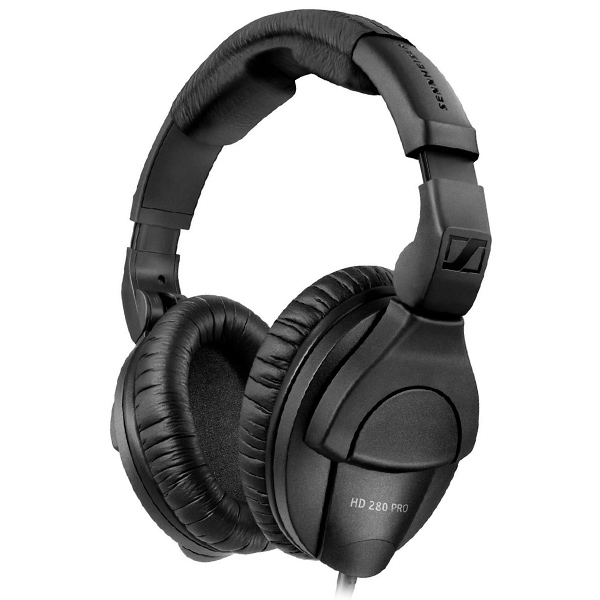
    1. Sennheiser HD 280 PRO
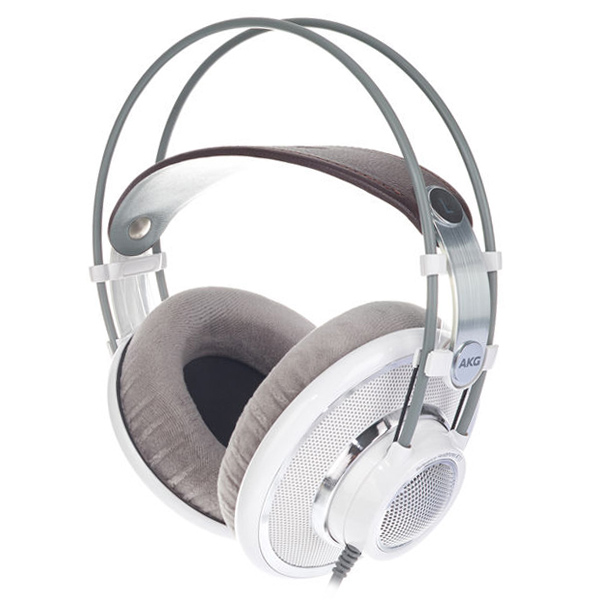
    2. AKG K701
    3. Sony MDR-7506
    4. Audio-Technica ATH-M50x
    5. Sennheiser HD650
    6. Shure SRH1440
  6. Everyone’s Ears Are Different
  7. References

Mixing on headphones? Isn’t that one of the seven deadly sins?

Well, it depends on who you ask.

As I’ll talk about in a bit, you can mix music on headphones if you know what you’re doing and if you have the right pair. So I’m going to introduce you to some of the best headphones for mixing in 2024.

Our picks for the best mixing headphones (2024):

  • Sennheiser HD 280 PRO
  • AKG K701
  • Sony MDR-7506
  • Audio-Technica ATH-M50x
  • Sennheiser HD650
  • Shure SRH1440

Should You Mix on Headphones?

You may have heard people say you shouldn’t mix on headphones. Some say it’s even impossible. But the reality is, lots of us do it and get great results.

As a part-time entrepreneurial musician, I often work late at night when my family is sleeping. So I sort of have to mix with headphones or else they would attack me like half-asleep zombies.

In fact, it’s important that your mixes sound good on studio headphones as well as any other sound source you can get your ears on. Plus, good headphones can expose little things you may not notice through studio monitors.

So if you know what you’re doing, you can mix professional-sounding music through a good pair of “cans.” The trick is to occasionally check the mix on your monitors (and your earbuds, phone, and car speakers). I’d say you could do 90-95% of your mixing on headphones, as long as they’re the right kind and you’re familiar with your pair.

We won’t get into how to mix music on headphones in this article, but for a beginner’s introduction to mixing, check out this in-depth guide we put together.
How to Choose the Right Mixing Headphones

Below I’m going to recommend the best mixing headphones currently on the market. But first, I want to talk about what makes a pair of headphones good for mixing.

For starters, each pair of headphones sounds a little different, and, generally speaking, the price tag matches the quality.

You should also know that most headphones color the mix. Many will give a small dB boost in the lower-ish frequency range to make up for the fact that you can’t feel the bass while using headphones. And then you’ll typically notice a roll-off on the higher end because the sound source is right up against your ears1.

The point is, some headphones color the mix differently than others. And some are more appropriate for mixing than others.

For example, open-back headphones are preferred for mixing. Why? Because the sound isn’t completely isolated, which means there’s a bit of cross-feed between your ears.

Cross-feed is when your one ear picks up some of the sound coming out of the opposite ear cup. This is better for the health of your ears and for the accuracy of the sound2.

And in our technologically advanced world, it’s no surprise there are crossfeed plugins. It’s software that emulates monitors by purposefully blending a bit of the right ear into the left ear and vice versa.

Hey, what do you think about trying our new Music Career HelperMusic Career Helper really quick? It’s totally free and could help get your career moving fast! Give it a try. It’s totally free and you have nothing to lose.

The New Reality: Mixing on Headphones Is Normal Now

A decade ago, mixing on headphones felt like a compromise. Now it’s just… how a lot of people work. If you’re a bedroom producer, a dorm-room artist, or you’re sharing walls with humans who dislike bass at 2 a.m., headphones are the studio. The bigger shift is listeners. Tons of your audience is on earbuds or headphones, so learning to mix confidently on headphones isn’t a “plan B.” It’s a modern skill.

Here’s the truth: headphones can be brutally revealing. You’ll hear mouth clicks, harsh hi-hats, weird edits, and sloppy fades faster than you might on speakers. That can make you better, faster. The catch is you have to understand the traps headphones create, so your mix still translates outside your head.

Headphones vs. Studio Monitors: What You Gain, What You Lose

Headphones give you detail and consistency. No room reflections. No untreated bedroom acoustics lying to you. That’s a big deal if your room is doing the classic “mystery bass boost” thing. But speakers give you a more realistic sense of space and punch, because sound hits both ears and interacts with the room. Headphones can exaggerate stereo width and make reverb decisions feel different than they will on speakers.

The smart move is not choosing one forever. It’s using headphones as your microscope and speakers as your reality check. Even if you only have small speakers, a quick check at low volume can catch balance problems you missed on headphones.

The Three Headphone Problems That Wreck Mixes

  • Stereo feels wider than real life. You can end up panning too extreme or pushing wide effects too hard.
  • Low end can be misleading. Some headphones hype bass, others hide it, and both can make your kick and bass relationship wrong.
  • Ear fatigue sneaks up fast. If you keep turning up, you’ll start making aggressive EQ choices that don’t translate.

How to Make Headphone Mixes Translate

First: pick 3 to 5 reference tracks you genuinely trust in your genre and listen to them on your headphones a lot. You’re teaching your brain what “good” sounds like on that exact pair. This matters more than people want to admit. The goal is to stop guessing whether your headphones are lying, because you’ll know their personality.

Second: do fast translation checks. Try earbuds, a car, a Bluetooth speaker, even your phone. You’re not looking for perfection everywhere. You’re checking for the big mistakes: vocal too quiet, bass too heavy, snare too bright, reverb too washed out.

Impedance and Power: Don’t Let Your Gear Undercook Your Headphones

Some “studio” headphones need more power than a laptop or basic interface can comfortably provide. If your headphones are high impedance and your output is weak, you might get low volume, soft punch, and less control in the low end. If you notice you’re always maxing your volume knob, or mixes feel flat, it might not be your ears. It might be your headphone amp situation.

Modern Tools People Actually Use

If headphones make stereo feel weird, try a crossfeed plugin. It blends a little left into right and makes the image feel more like speakers. If your headphones have a strong tonal “flavor,” calibration software can help flatten the frequency response. These tools won’t mix for you, but they can reduce the number of bad decisions caused by a misleading headphone curve.

Comfort Is a Mixing Feature

If your headphones hurt after 45 minutes, you will rush decisions. That’s not motivational poster talk. It’s real. Comfort affects patience, and patience affects mix quality. Pay attention to clamp force, pad material, heat buildup, and weight. For long sessions, open-back designs often feel less sweaty and more natural, but they leak sound. Closed-back can be better if you’re recording vocals in the same room.

If you want the quickest win: mix a little quieter, take breaks, and reference often. That alone will level up your headphone mixes more than chasing a “perfect” model.

Mixing on headphones isn’t a compromise anymore. It’s a real workflow. The producers who get great results aren’t “lucky.” They know their headphones, reference constantly, and check translation like it’s part of the job.

The Best Mixing Headphones

Alright, now for the best mixing headphones of 20241.

I compiled this list based on my own experience (I own and use the Sennheiser HD 280 PROs) as well as research using reputable resources like Tape Op Magazine, Sound On Sound, and forums for professional Mixing Engineers.

Sennheiser HD 280 PRO

Sennheiser HD 280 Pro

Like I said, I use these headphones and I get what I think are great mixes. These are closed-back, but I balance my mixing time between these and my studio monitors — I’d say about 80% headphones, 20% monitors. And then I check the mix on my earbuds, car speakers, and Bluetooth speaker.

These are used by a ton of Producers and Engineers because the sound is high-quality, the build is durable, and the price is affordable. When you first get them, the sound may be a bit harsh, but after several hours of using them, they’ll be worked in and more balanced.

Again, they’re really meant to be studio headphones, but if you make sure to regularly check your mix through monitors, you can do just fine.

Street Price: $99.95
sennheiser.com

AKG K701

AKG K701

The AKG K701s are open-back headphones, so they’re built for mixing. (Note: the sound will bleed, so they’re not good for tracking and monitoring).

The aspect of these ‘phones that Engineers love is their flatness. This means they deliver a super-accurate sound with minimal coloring. Plus, AKG individually tests each pair of headphones, even numbering them during manufacturing.

Like many headphones, it will take some time to break these in, but once you do, you’re in for a treat. The frequency response is flat (that’s a good thing) and the sound is warm yet detailed.

They’re a bit pricey, but remember — you get what you pay for.

Street Price: $449
akg.com

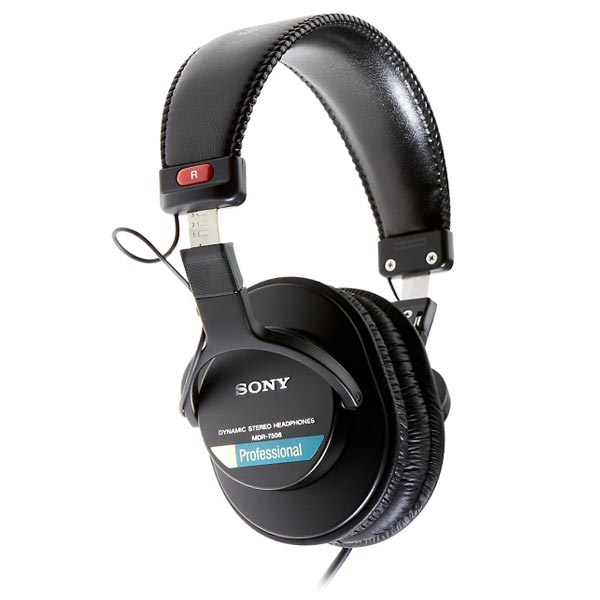
Sony MDR-7506

Sony MDR 7506

These are another pair of closed-back headphones, but their isolation isn’t superb, which makes them a good choice for mixing.

Although their frequency response is not as flat as some other headphones, it’s still relatively flat. They do accentuate some frequencies more than others, like the low-mids. The mid frequencies are nice and balanced while the higher frequencies are rolled off a bit.

Overall, a good way to describe these headphones is “warm and balanced.”

Street Price: $130
pro.sony

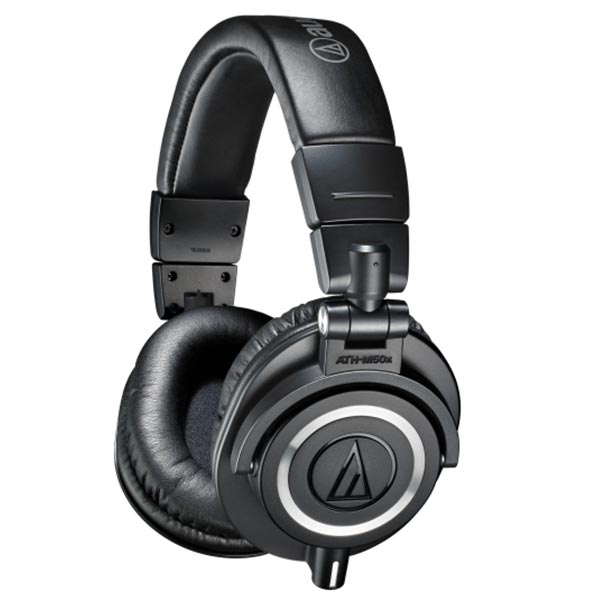
Audio-Technica ATH-M50x

Audio Technica ATHM-50X

Although these are closed-back headphones, they work super well for mixing.

Mixing Engineers talk about how clear they are, especially in the higher ranges. The mids are nice and smooth and the low-mids get a nice little boost, which makes it easier to unmuddy your mix. On top of that, the bassy sounds are present but not overpowering.

And to top it all off, they’re comfy. They’re big enough to fit big heads, and those with a smaller head may experience some leakage, which is ideal for mixing. And the ear cups are soft, allowing you to mix without getting uncomfortable.

Street Price: $149
audio-technica.com

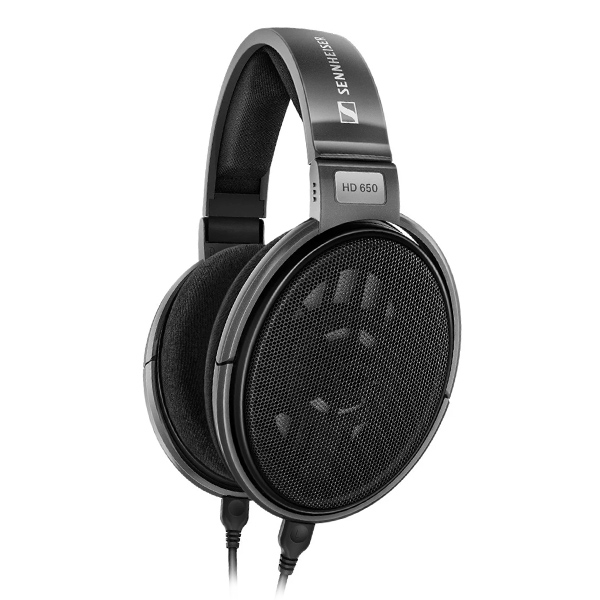
Sennheiser HD650

Sennheiser HD 650

The open-back HD650s are known for their accuracy, which is exactly what you want when mixing. No frequencies are boosted and there’s no coloring, allowing them to deliver a clean, smooth, and comfortably bassy sound.

Some would call them dull, but that can be a good thing if you’re using them to mix music. They can make it sound as if you’re sitting in the back of the room during a concert, but again, that can be a good thing.

They’re neutral, meaning they’re great for mixing.

Street Price: $319
sennheiser.com

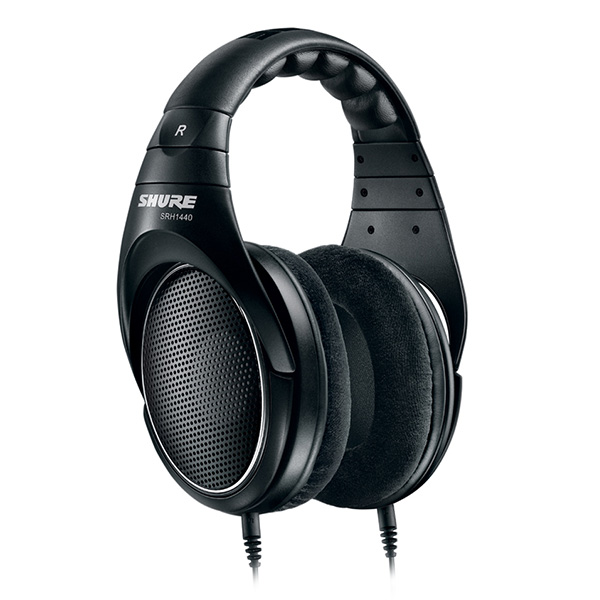
Shure SRH1440

Shure SRH1440

Shure’s SRH1440, a pair of open-back headphones, are smooth yet with accentuated highs. But the area on the frequency spectrum that most often has poor sibilance is tamed, so the mid-highs still sound smooth. And because the highs are a bit more prominent, it can be easier to mix in that area as it’s easier to pick up on the little things.

The bass, on the other hand, gets a bit distorted in the very low end of the spectrum, around 40 Hz. So if you’re mixing music that needs umph-y bass, these may not be a great choice.

But for all other types of music, especially those that need an airy feel, these are a solid option from a super reliable company.

Street Price: $299
shure.com

Everyone’s Ears Are Different

My ear canal is shaped differently than yours. My actual ears are not the same as yours, which affects how sound reverberates within the ear canal and can make music sound slightly different. In fact, research suggests that ears may be as unique to each person as their fingerprints3.

So if you try out these headphones and you don’t hear the characteristics I’ve talked about, it may be because of this ear fact.

But one thing is certain this list includes some of the best mixing headphones of 2024.

  1. 1Walker, Martin. "Mixing On Headphones". Sound on Sound. published: January 2007. retrieved on: 14 September 2020
  2. 2Various. "Crossfeed". Wikipedia. published: 14 August 2017. retrieved on: 14 September 2020
  3. 3Guastella, Tara. "Ears: The New Fingerprints?". Hearing Health Foundation. published: 17 February 2014. retrieved on: 14 September 2020